Nature as the guiding principle
The land is not a building plot. It is what we build with.
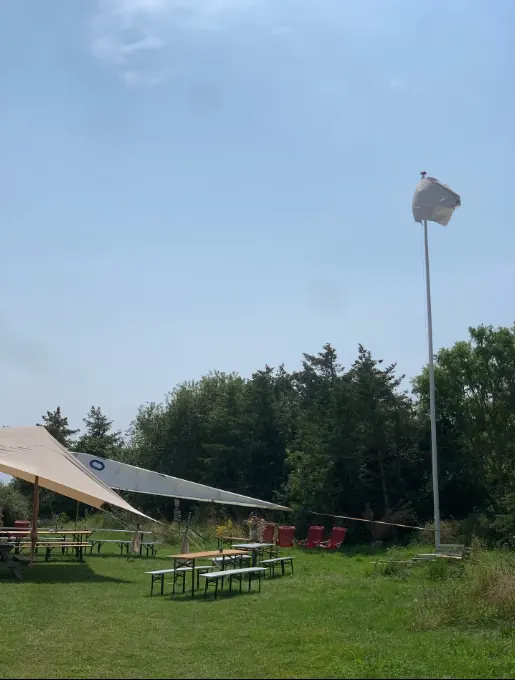
Six hectares of old campsite. The landscape decides where things will go. Biodiversity and nature-based management are part of it from the start, to raise the natural quality of the place and contribute to the island’s ecosystems.
For us, permaculture is three things that belong together: the land should be better off for our being here. The people too. And what is left over is shared.
Farming
Agersø has been farmed for a thousand years. Windbreaks, stone walls, orchards and grazing are the island’s own way of holding soil, shelter and water. We reuse it.
Coastal nature
Salt, wind and sand. Dry grassland on the dry soils, salt meadows and wetlands on the low ground. The species that thrive here chose the place themselves. Those are the ones we plant.
Cultural botany
From the Middle Ages to the 1700s, the islanders grew medicinal plants and witchcraft herbs by their houses. Many still grow wild in hedges and ditches. They are part of the island’s own character, and they come with us.
The island’s own character is the common thread. What we plant should blend with Agersø’s present landscapes – and lift them.
Five landscape principles
The idea is that human communities can be as positive a contributor to the world’s ecosystems as we are destructive today.
The five principles are how we want to show it on six hectares.
Natural landforms
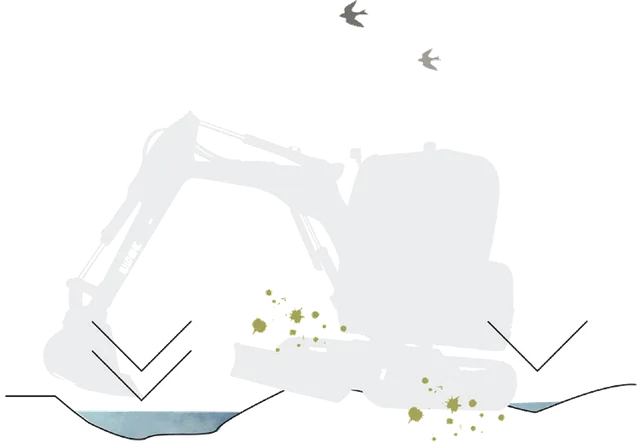
Natural landforms are recreated – hollows, ditches, small hills – so the land connects to the island’s habitat corridors instead of lying as a flat lawn between them.
A good microclimate
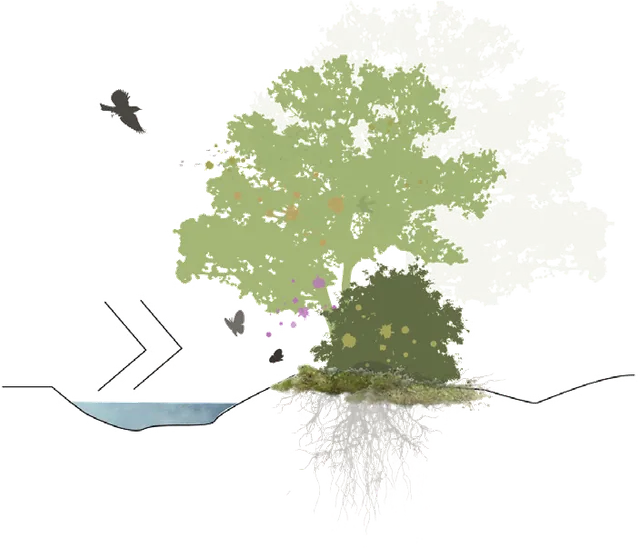
Shelter, shade and water where people, animals and insects need them. Windbreaks and groves take the strong westerly winds, bind the soil and hold the water in cloudbursts.
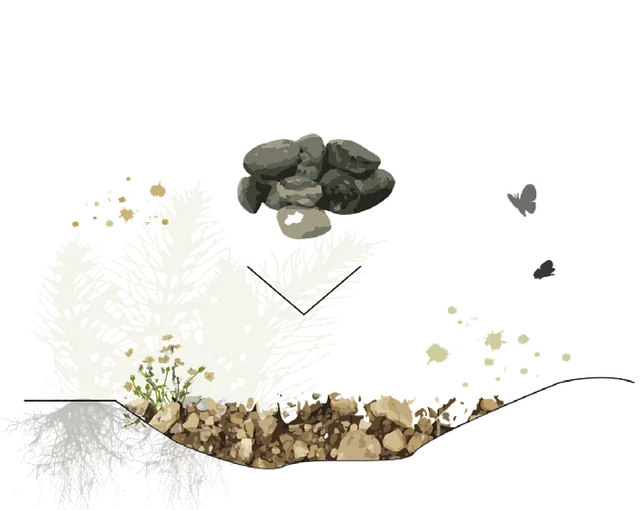
Natural infrastructure
Roads, paths and the fixed elements should be part of the landscape and be habitat themselves: macadam that grows over at the edges, stone walls for lizards, insect hotels, bird and bat boxes.
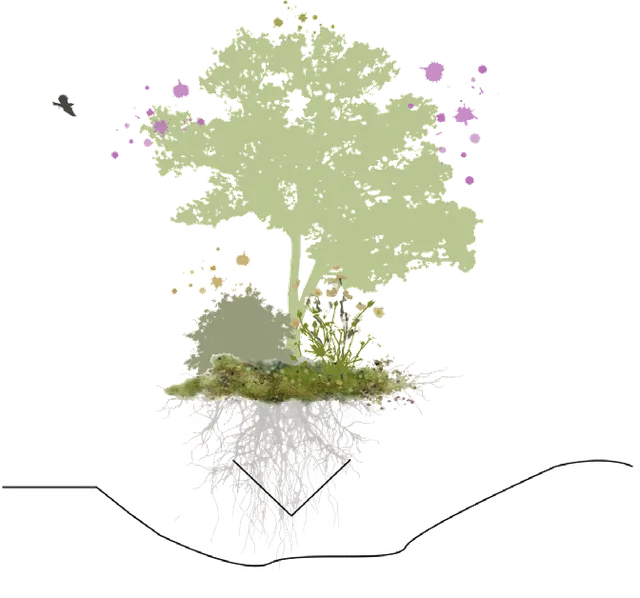
Local habitat types
Dry grassland, meadow, scrub, hedge and wetland as they are found on Agersø, with species from here. The aim is to preserve and increase local species richness – and to tell the island’s cultural history through what grows.
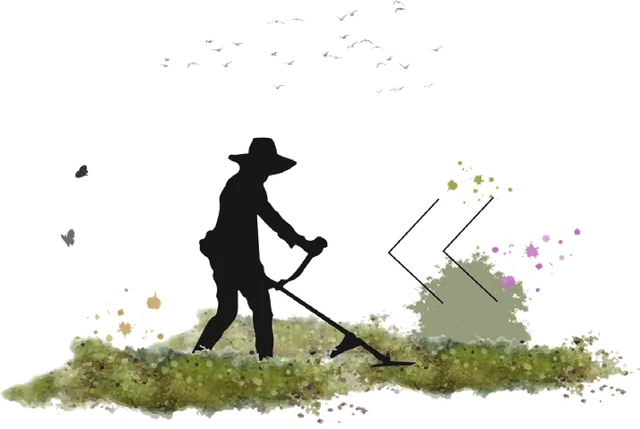
Nature-based management
A long-term management strategy in which caring for nature is part of the community and of the experience of the place. Scything, controlled burning, tackling invasive species and monitoring – done by the people who are here.
Three layers
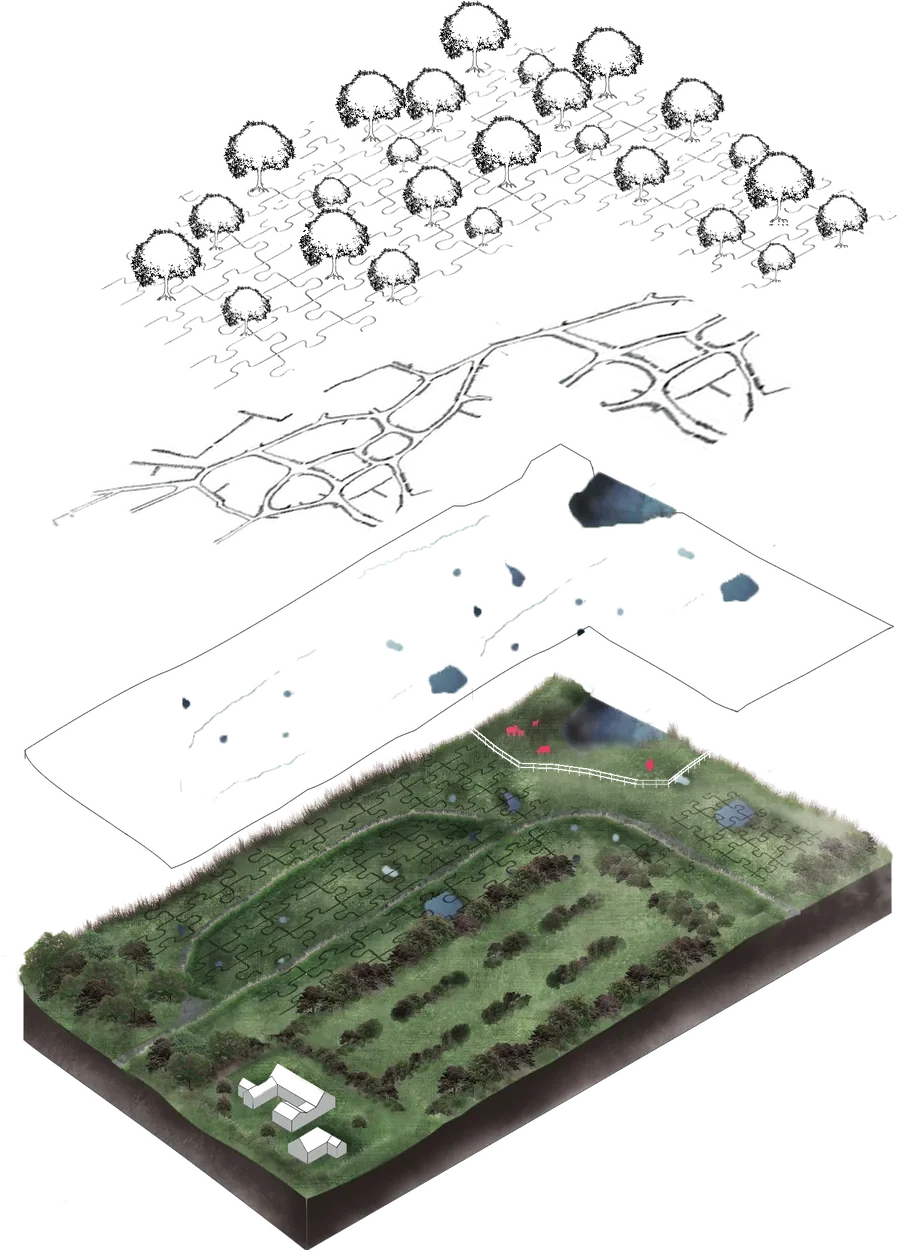
The site is planned in three layers on top of each other. At the bottom the water and the protected nature, above them the roads and paths, at the top the plots. The layers are flexible pieces that can be moved once the preliminary surveys show what the land can actually do.
A dug pond of at least 1,000 m² and a paddock with grazing animals of the same size. The pond is laid out as habitat for the island’s key species, the fire-bellied toad and the great crested newt, and is connected to a network of smaller rain ponds that handle rainwater locally and give more feeding and breeding sites. We want to take part in the island’s counting and release of amphibians.
The fire lane, the main road and the links out into nature are laid in macadam: crushed granite or beach stone with gravel and sand in the gaps, which in time grows over with grass and herbs. The road carries heavy vehicles and still disappears into the landscape. The routes are narrow and winding, like the streets of Agersø village.
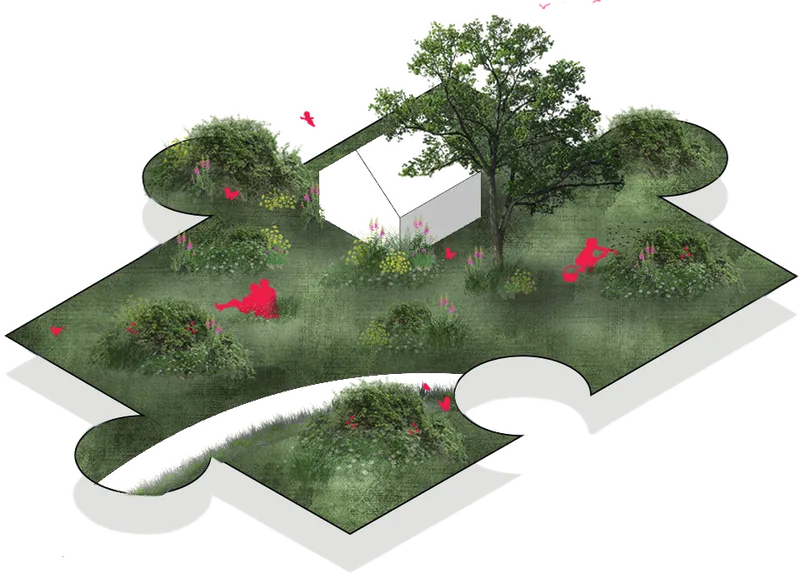
The land is divided into smaller plots like jigsaw pieces. Each piece holds two to four planting types and the fixed landscape elements: stone walls, insect hotels, bird boxes, a house for bats. Size and shape are decided by practical, landscape and ecological considerations.
Amphibians and reptiles the pond is for
- Fire-bellied toad · key speciesBombina bombina
- Great crested newt · key speciesTriturus cristatus
- Green toadBufotes viridis
- Moor frogRana arvalis
- Natterjack toadEpidalea calamita
- Sand lizardLacerta agilis
Before we dig
- Climate analysis: rainfall, wind, sun and temperature on this exact plot.
- Landscape analysis: spaces, sightlines and landforms.
- Baseline report: which species are here now. Then we can measure whether it got better.
- Soil analysis: what can be grown where.
The site changes according to what the surveys find.
Six planting types
All with species from the island. The trees’ combined canopy may cover at most 10% of the area – Agersø is an open landscape, and it should stay that way.
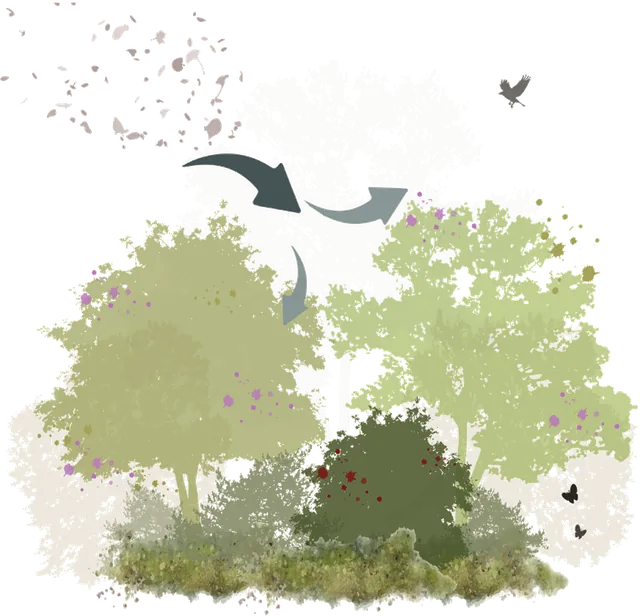
Windbreaks
An old farming tradition: they bind the soil, give shelter and soak up large amounts of water. Laid in small sections on selected plots, they become edible, species-rich refuges for people, animals and insects.
- Scots pinePinus sylvestris
- Bird cherryPrunus padus
- HazelCorylus avellana
- RowanSorbus aucuparia
- BullacePrunus domestica insititia
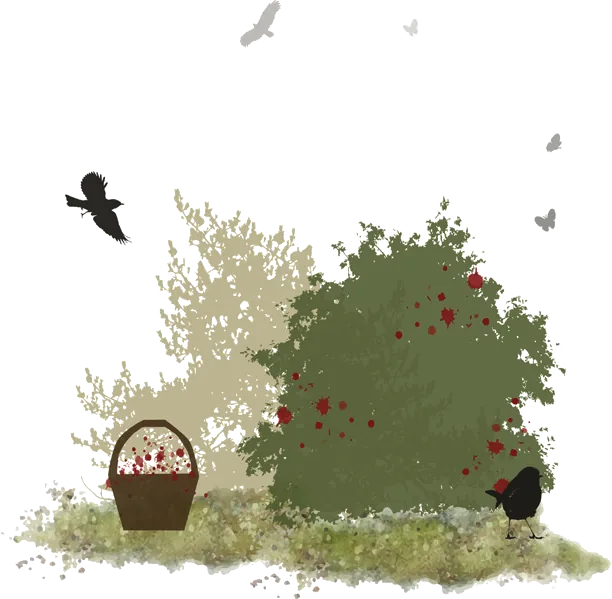
Berry thickets
Food and habitat. Raspberries, hawthorn, elder and blackberries can be picked by the people who are here. The wild honeysuckle smells in the evening and draws in moths.
- ElderSambucus nigra
- HawthornCrataegus laevigata
- RaspberryRubus idaeus
- BlackberryRubus fruticosus
- Wild honeysuckleLonicera periclymenum
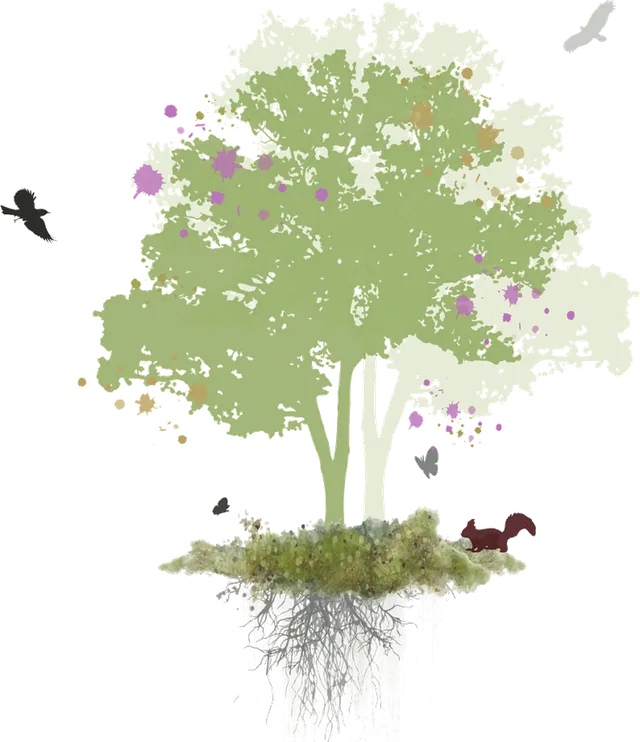
Character trees
Edible trees with nuts and fruit, planted singly as a nod to the old orchards. One tree that can be seen from a distance, not a plantation.
- Sessile oakQuercus petraea
- Wild cherryPrunus avium
- WalnutJuglans regia
- Crab appleMalus sylvestris
- PlumPrunus domestica
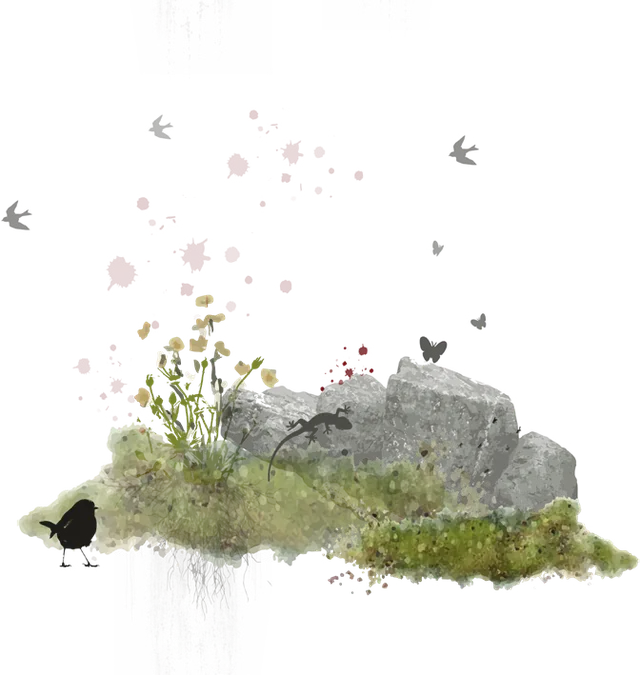
Dry grassland and stone walls
Dry, stony soils that were never fit for the plough became grazing. Here they become flower-rich meadows for insects and pollinators. The stone walls are warm spots for lizards and a nod to the island’s old gardens.
- Devil’s-bit scabiousSuccisa pratensis
- Wild marjoramOriganum vulgare
- Quaking grassBriza media
- Wild thymeThymus serpyllum
- Viper’s buglossEchium vulgare
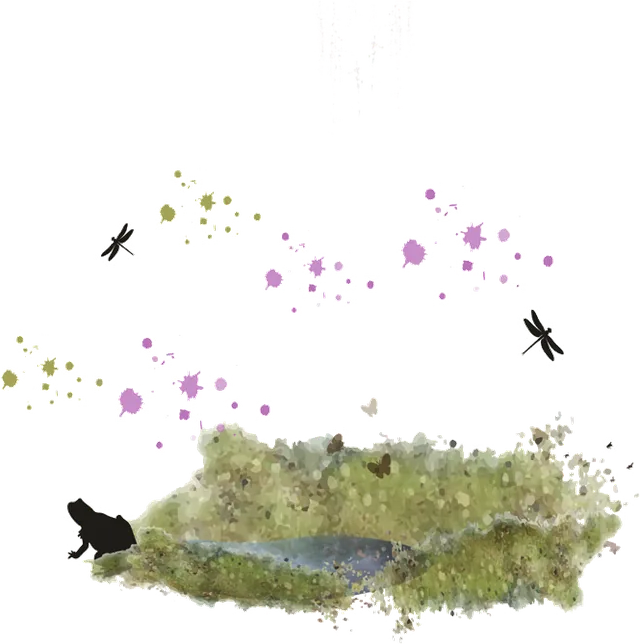
Meadow and wetlands
Hollows and ditches that collect rainwater and form a network of small wetlands. The water level follows the rain. Temporary breeding and feeding sites for amphibians and water insects.
- Red campionSilene dioica
- Tufted vetchVicia cracca
- Oxeye daisyLeucanthemum vulgare
- Water avensGeum rivale
- Ragged-robinLychnis flos-cuculi
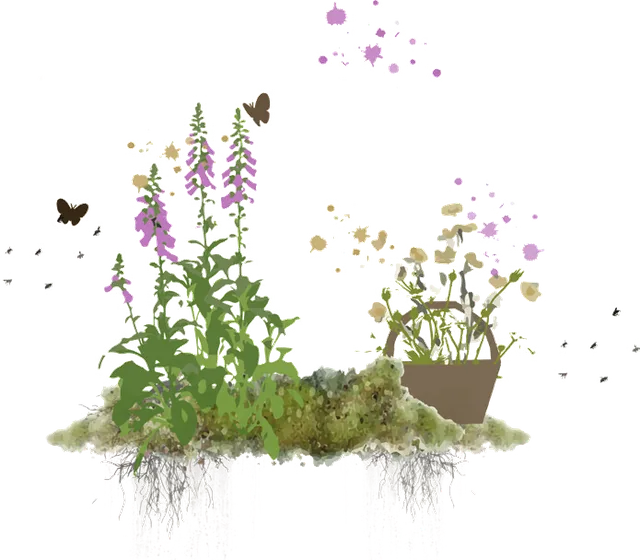
Relict plants
The island’s naturalised medicinal plants and witchcraft herbs from the time they belonged to the household. Rich in nectar, with shape and colour. They get room by the buildings, in hedges and in scrub.
- HenbaneHyoscyamus niger
- ValerianValeriana officinalis
- FoxgloveDigitalis purpurea
- HopHumulus lupulus
- Marsh mallowAlthaea officinalis
The year of running it
Caring for nature is built into the year’s stays, so it becomes something we learn and do together, with our fingers in the soil.
- Winterpruning · compost · starry nights
- Springsowing · planting out · tadpoles
- Summerweeding · watering · invasive species · berries
- Autumnfruit and nuts · scything · controlled burning
What we can be measured on
- A baseline for species and soil, before the first spade goes in.
- A pond and a paddock of at least 1,000 m² each.
- Six planting types with species from the island. Canopy under 10%.
- A yearly count of amphibians, insects and plants – made public.
- The running of it done by the people who live and stay here, as part of the stays.
The form of ownership takes its inspiration from Grobund and Andelsgaarde: the land must never be sold out from under the community.
If you want to dig with us
The build-with-us weeks are land work too. Hedges, the pond, stone walls and sowing meadows are things you can come and be part of.